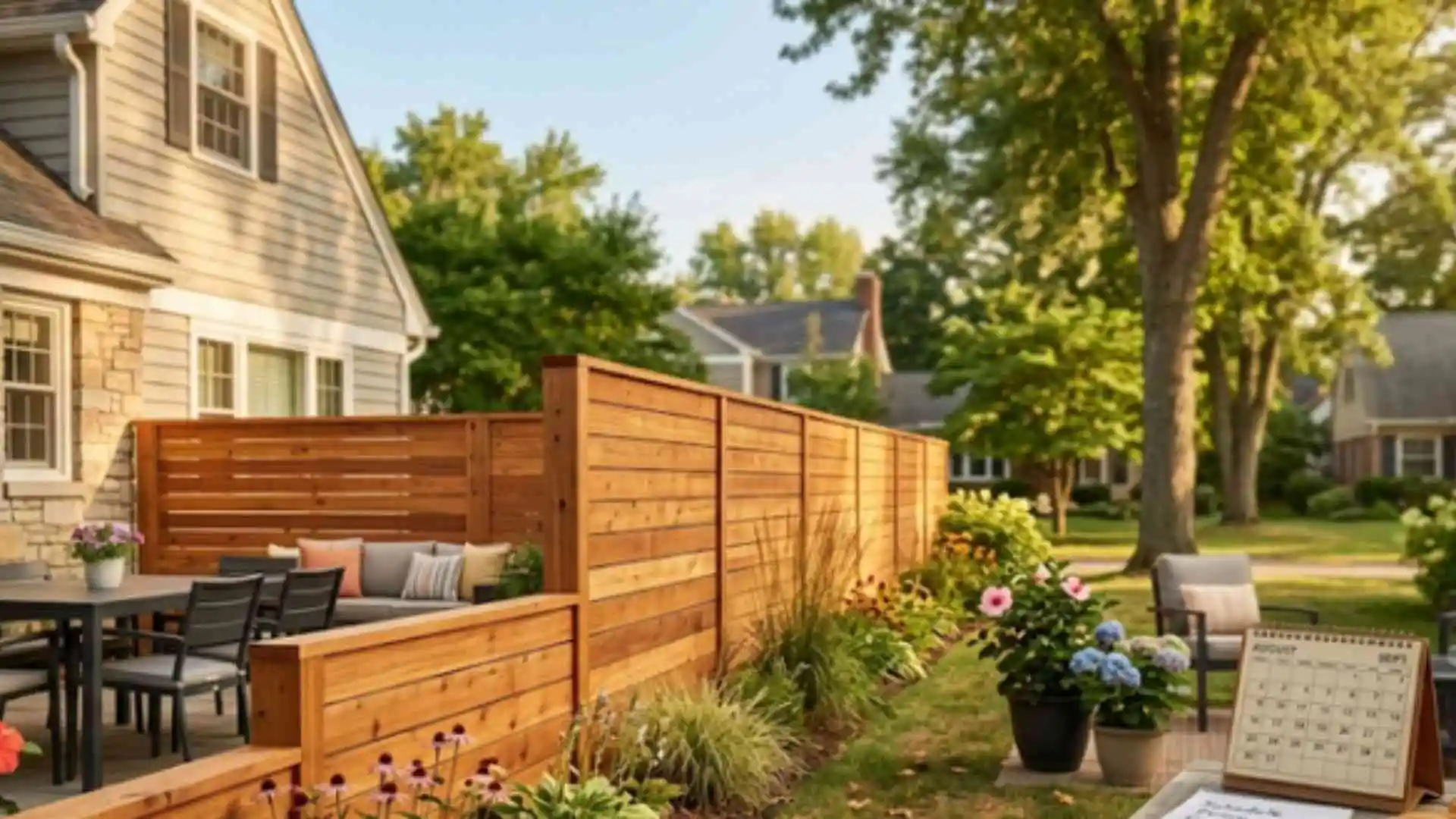
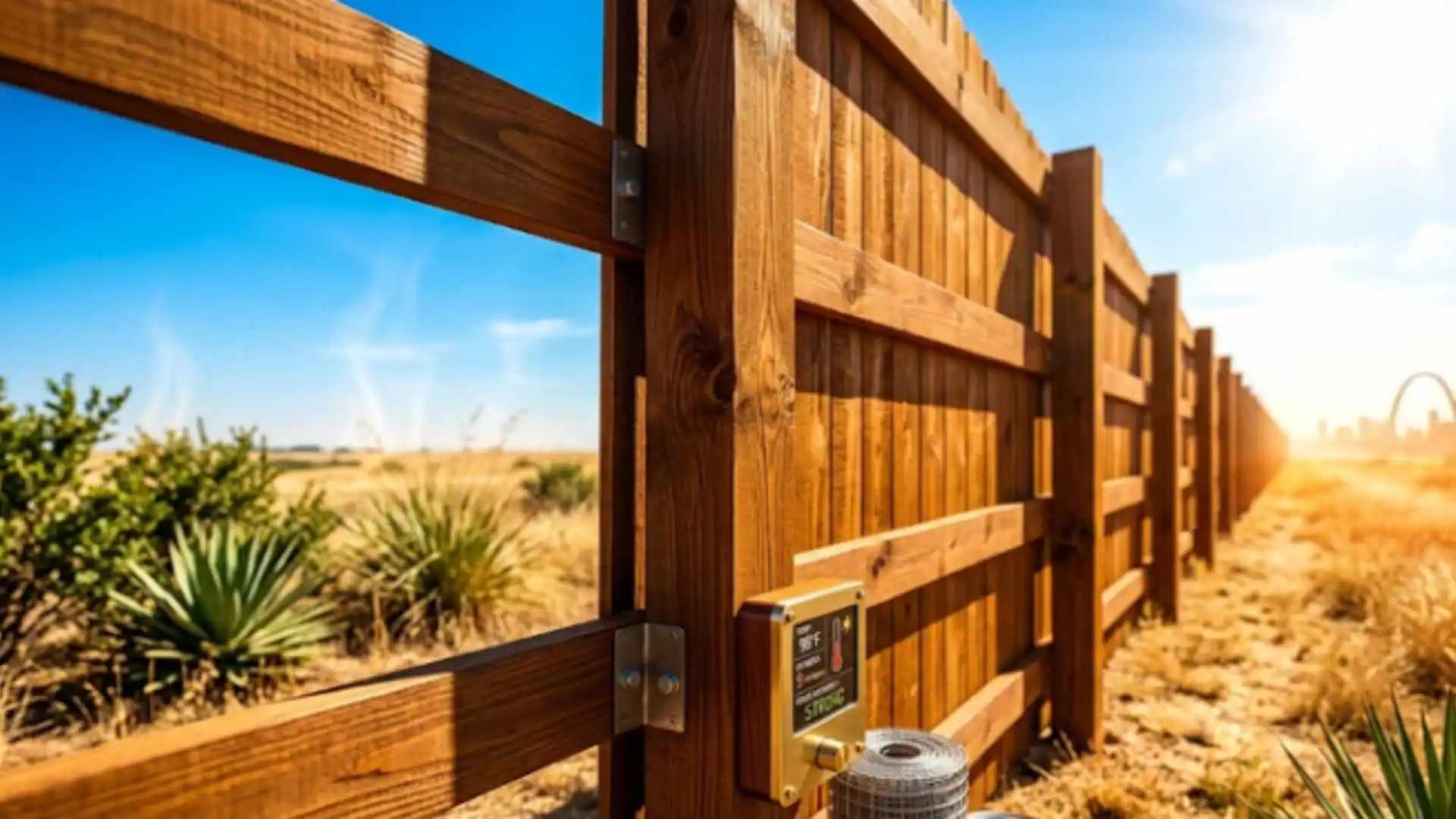
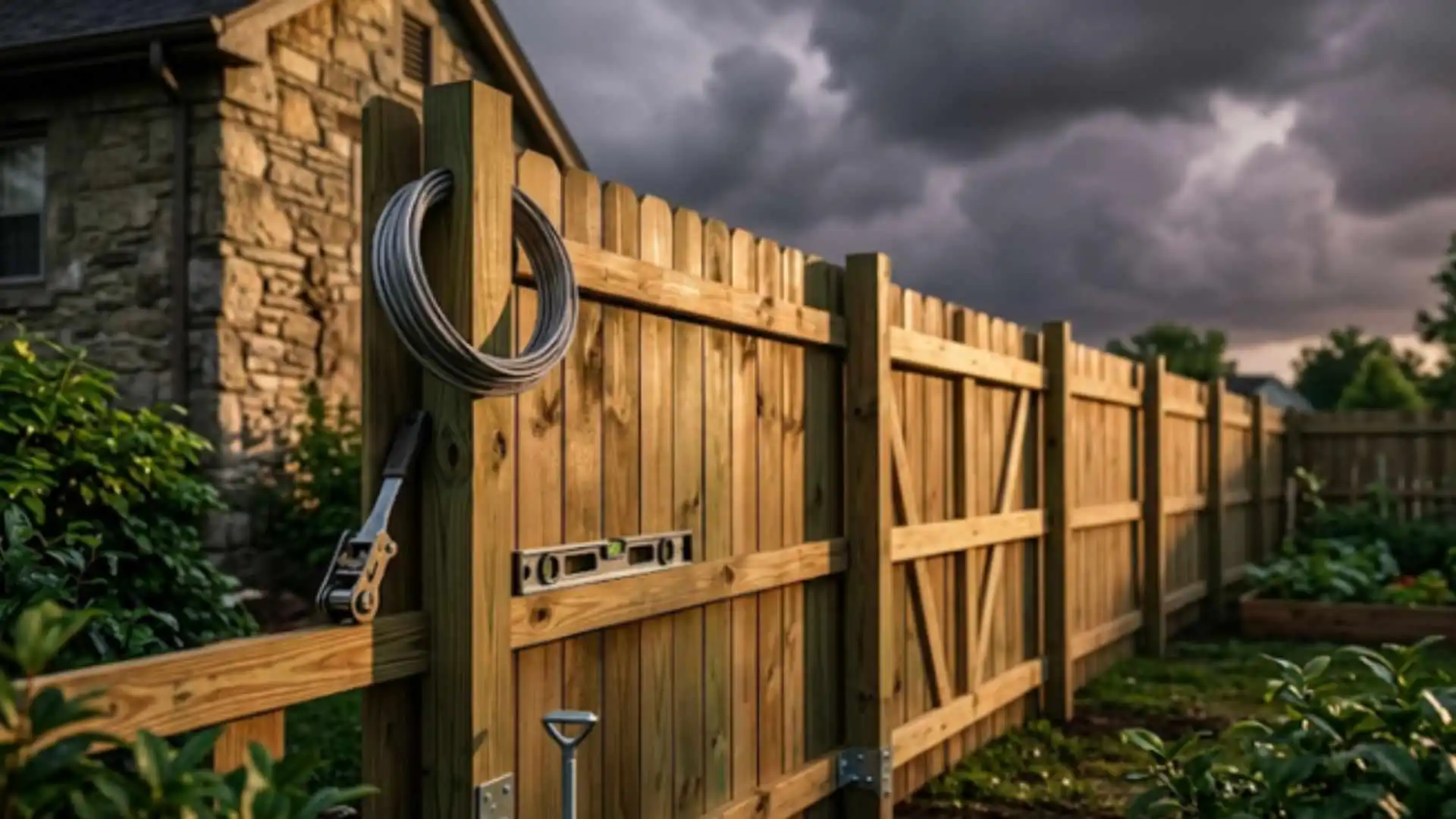
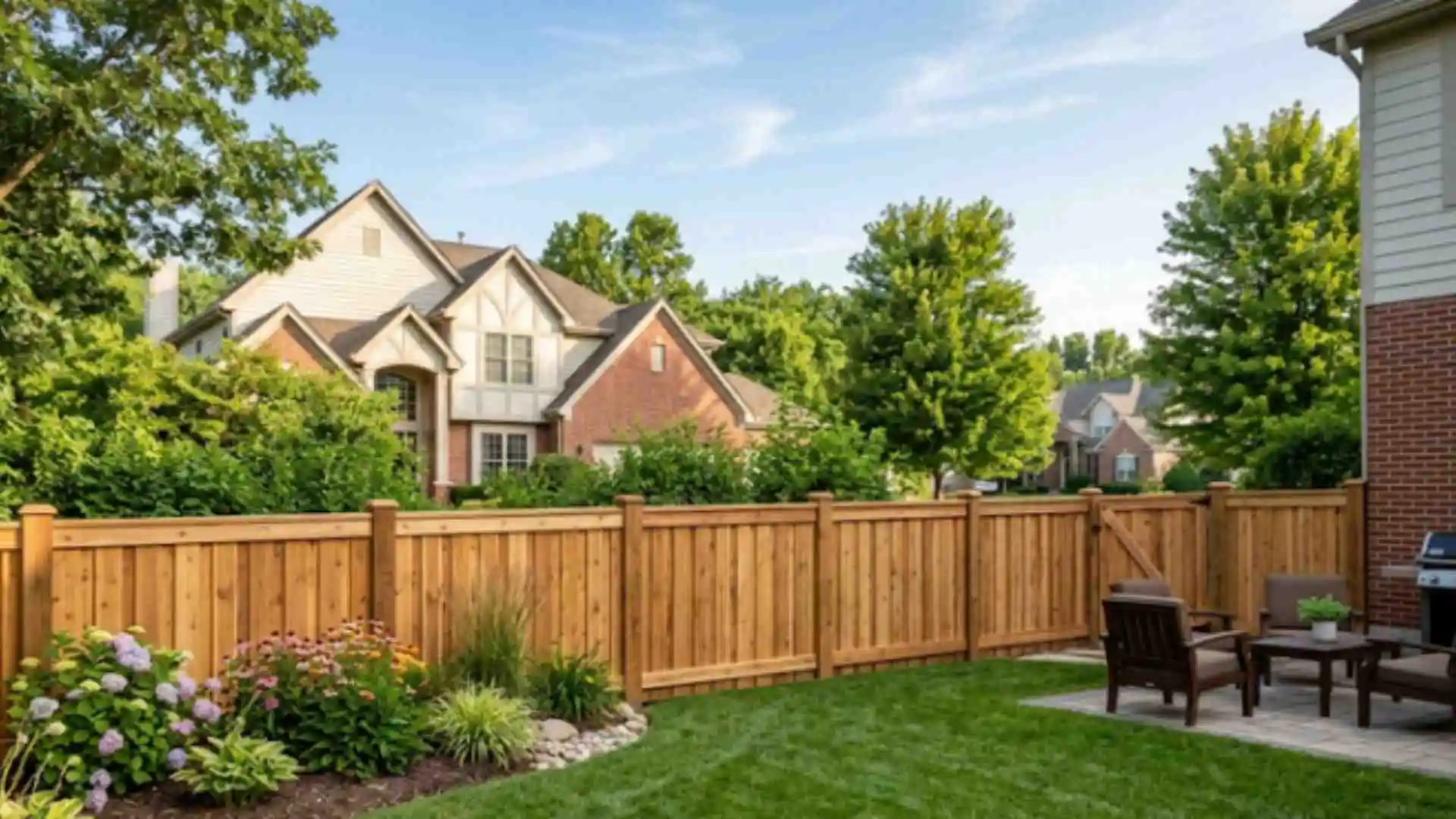
If you’ve spent a summer in St. Louis, you already know what you’re dealing with. According to NOAA’s National Centers for Environmental Information, temperatures regularly climb into the 90s°F throughout summer, and on the hottest days, St. Louis can hit triple digits. Pair that with suffocating July and August humidity, and you have a climate that puts serious stress on every outdoor structure on your property.
Your fence feels all of it. So if you’re planning a new custom fence or replacing a weathered old one, the material you choose matters far more than most people realize. As a Missouri fence builder with years of experience in this region, we’ve seen firsthand what the St. Louis climate does the wrong material.
Why St. Louis Weather Is Uniquely Tough on Fences
St. Louis sits in a humid subtropical climate zone, one that combines hot, muggy summers with bitterly cold winters. According to Weather Spark’s long-term climate data, temperatures swing more than 70 degrees between seasons, putting enormous stress on fencing materials through repeated expansion and contraction.
For fencing, summer does the most damage:
- UV radiation is the most destructive outdoor environmental factor for both wood and synthetic materials. Research published in Photochemical & Photobiological Sciences (Springer Nature) confirms that UV rays initiate chemical changes in wood surfaces and cause photo-oxidation in plastics, leading to discoloration, brittleness, and structural breakdown over time.
- Heat and humidity create ideal conditions for wood rot and warping, especially during July and August, when St. Louis dew points regularly exceed 65°F.
- Afternoon thunderstorms and seasonal ground movement put constant stress on posts and panels.
Choosing the right material from the start saves you years of headaches and real money.
Best Fence Materials for St. Louis Summers
1. Vinyl (PVC) Fencing: The Low-Maintenance Champion
Vinyl is one of the most popular fencing choices in humid climates, and the data backs it up. According to American Fence & Supply, vinyl has a typical lifespan of 20 to 30 years with minimal upkeep. Most quality vinyl fences are manufactured with UV inhibitors built into the material, a critical advantage in a city that averages nearly 2,600 sunshine hours per year.
The International Association of Certified Home Inspectors (InterNACHI) also notes that modern high-tech polyvinyl formulations offer roughly five times the tensile strength of wood, making it difficult to damage under normal conditions.
Ideal for: Privacy fencing, families who want a durable, set-it-and-forget-it option.
Trade-off: Higher upfront cost than wood; limited refinishing options.
2. Aluminum Fencing: Elegant and Built to Last
Aluminum doesn’t rust, doesn’t warp, or get affected by humidity the way steel or wood can be. According to American Fence & Supply, most aluminum fence systems last 25 to 35 years. Modern Fence Co. notes that factory-applied powder-coat finishes can resist UV fading for 20 years or more, a meaningful advantage in the St. Louis sun.
Ideal for: Pool enclosures, decorative borders, homeowners who want a refined, low-maintenance look.
Trade-off: Open style limits privacy; it can dent under heavy impact.
3. Wood Fencing Classic, But Requires Commitment
Wood’s natural beauty is hard to match, but St. Louis summers are tough on it. Research from BioResources (NC State University) confirms that UV radiation is the most damaging outdoor environmental factor for wood, causing surface checking, discoloration, and fiber breakdown. According to American Fence & Supply, most wood fences last 10 to 15 years, even with routine care, roughly half the lifespan of vinyl or aluminum.
Cedar is the best local choice, offering natural resistance to moisture, insects, and rot. Buzz Custom Fence notes that properly treated pine and cedar can extend lifespan to 20+ years, but that requires sealing or staining every 2–3 years without fail.
Ideal for: Homeowners who love a natural aesthetic and are committed to seasonal upkeep.
Trade-off: Highest maintenance of any material; shortest lifespan if neglected.
4. Composite Fencing: Sustainable and Smart
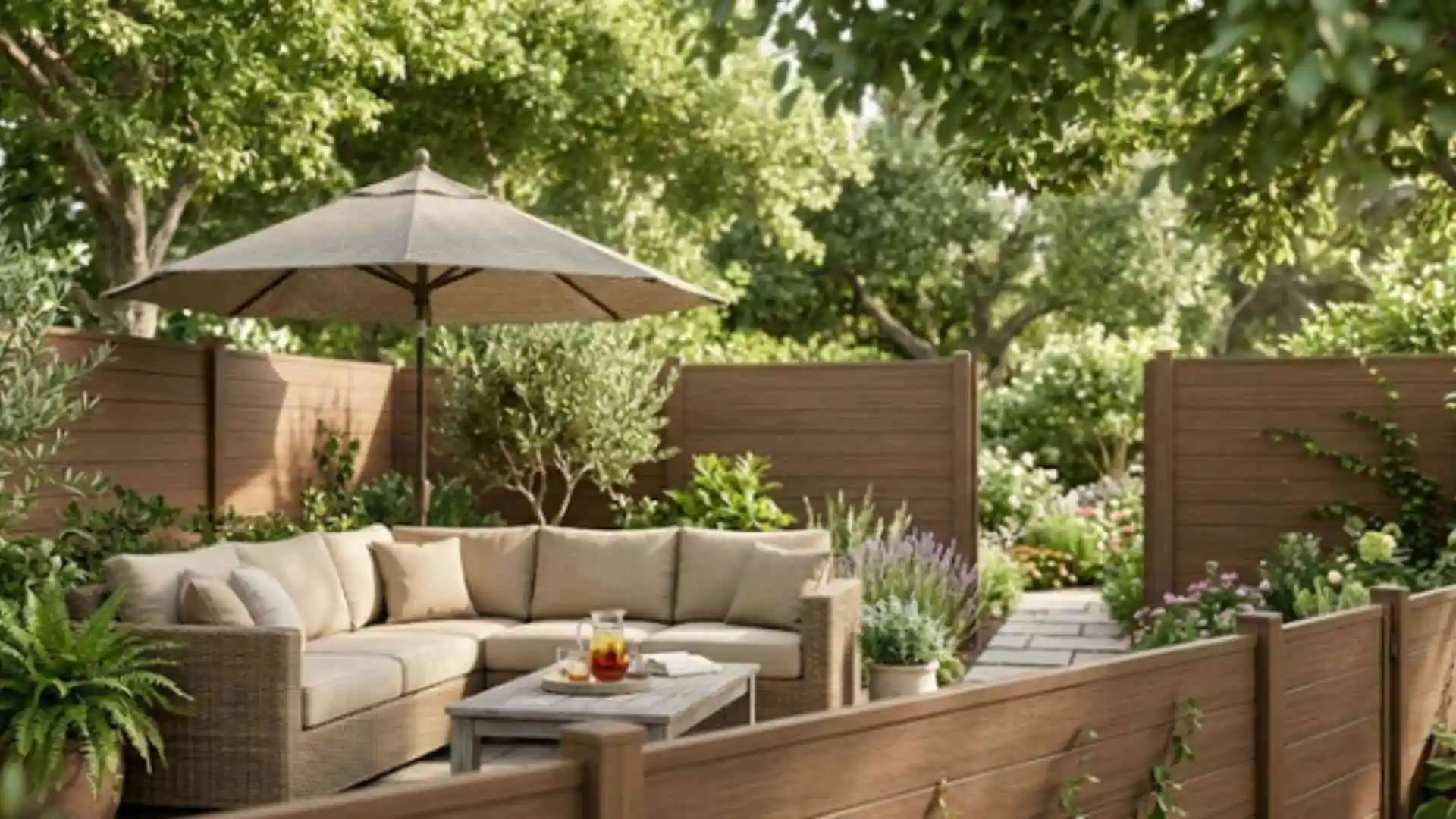
Composite fencing combines recycled wood fibers with recycled plastic to create a material that looks like wood but performs like vinyl. It’s an ideal choice for homeowners interested in eco-friendly fencing in St. Louis, MO. According to First Fence of Georgia, some composite products are made from up to 96% recycled materials, reducing demand for new timber and virgin plastic alike.
The sustainability benefits go beyond materials. Ecoscape notes that because composite fencing requires no painting, staining, or sealing, it eliminates the chemical treatments, solvents, VOCs, and heavy-metal pigments that traditional wood fences can leach into surrounding soil. Amigo Fence also reports that homeowners using composite materials spend up to 70% less time on maintenance than those with wood fences.
Ideal for: Eco-conscious homeowners who want wood aesthetics with minimal upkeep.
Trade-off: Higher upfront cost than wood; darker colors can absorb and retain heat.
5. Chain Link Practical and Weather-Proof
Chain link allows airflow, doesn’t trap heat, and needs almost no maintenance. Even the American Fence Association recognizes it as a secure and economical solution. According to Broward County Fence, galvanized chain link with a protective coating can last 15 to 30 years with minimal intervention.
Ideal for: Utility areas, pet containment, commercial properties, and large perimeters.
Trade-off: Minimal privacy; functional rather than decorative.
Quick Comparison: St. Louis Summer Performance
| Material | Heat Resistance | Humidity Resistance | Maintenance | Est. Lifespan |
| Vinyl | Excellent | Excellent | Very Low | 20–30 yrs |
| Aluminum | Excellent | Excellent | Low | 25–35 yrs |
| Cedar Wood | Good | Moderate | High | 15–30 yrs (treated) |
| Composite | Very Good | Very Good | Very Low | 20–30 yrs |
| Chain Link | Excellent | Excellent | Very Low | 15–30 yrs |
Estimated lifespans are drawn from information provided by American Fence & Supply, Broward County Fence, and Buzz Custom Fence.
A Few Tips That Apply to Every Material
- Invest in professional installation. According to Incafence, installation quality is one of the primary factors determining how long any fence lasts, regardless of material.
- Inspect after storms. St. Louis thunderstorms can loosen hardware and shift panels. A quick post-storm check prevents small issues from becoming costly repairs.
- Seal wood fences before summer. Applying a UV-blocking sealant in spring is the single most effective way to protect a wood fence through peak heat and humidity.
- Choose lighter colors in full sun. Darker materials absorb significantly more radiant heat, accelerating surface wear over time.
Ready to Make the Right Call?
The right fence material comes down to matching the product to your lifestyle, budget, and maintenance tolerance. As fencing contractor in St. Louis, MO, we’ve guided hundreds of homeowners through exactly this decision, and we’re ready to help you do the same.
Explore Our Services to see available styles and materials, learn more about our team on our About Us page, or reach out through Contact Us for a free estimate. As a trusted fence installation company in United States, Faster Fences brings the expertise and craftsmanship to get your project done right the first time.
Don’t wait for summer to expose your fence’s weak spots. Let’s get you ready.